Layout
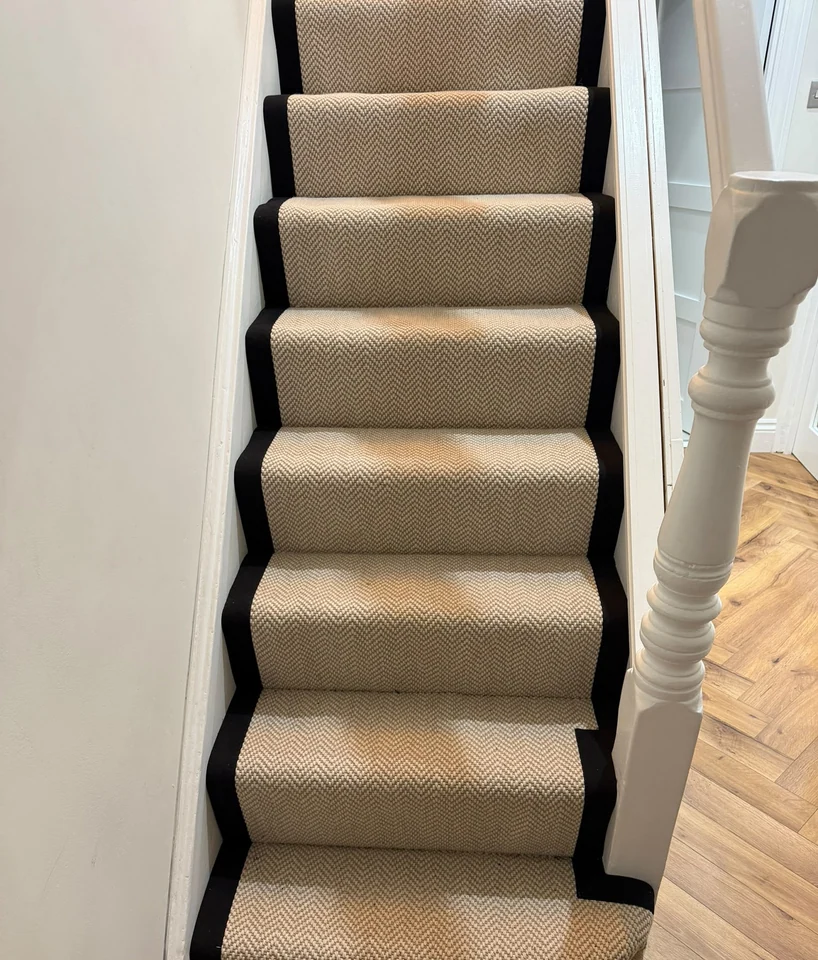
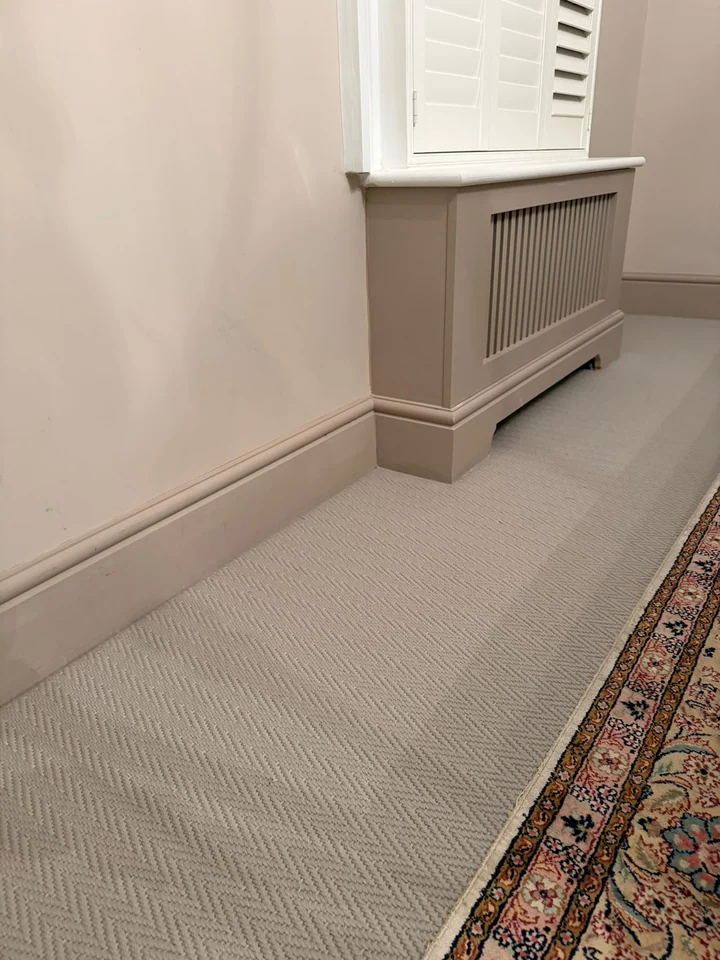
View a generous sample horizontally in the intended room, then from the main doorway and a seated position. Texture and pile direction can alter the visual impression as light moves across the surface. Compare it beside retained fabrics, painted joinery and any landing or stair finish. If a runner is planned, review the texture with a binding sample at the intended scale. A subtle carpet can become visually stronger across a full room, while a small patterned swatch may settle into a quieter overall texture when seen from a distance.
Specification
Identify the exact fibre composition, construction and manufacturer's suitability for the intended room or stairs. Ask for the product's cleaning, stain-treatment and maintenance guidance, including any restrictions relevant to the household. Confirm the approved underlay and fitting system rather than selecting cushioning by feel alone. Describe pets, outside access and the expected use without assuming a particular texture or fibre is automatically appropriate. For a runner, the carpet must also suit the proposed edging and cutting arrangement. Keep that technical assessment attached to the exact sample being approved.
Quotation
Request a proposal identifying the carpet reference, fibre specification, underlay, fitting and any binding or preparation work. State whether the scope includes rooms, stairs, landings and their connections. Ask who will measure and establish the cutting plan, especially where a directional texture or pattern matters. Include removal, disposal and furniture responsibilities where relevant. The handover should provide the applicable care guidance, so whoever cleans the home understands the selected system. Comparing these complete details gives a clearer decision than judging carpet only by sample softness or a broad fibre label.