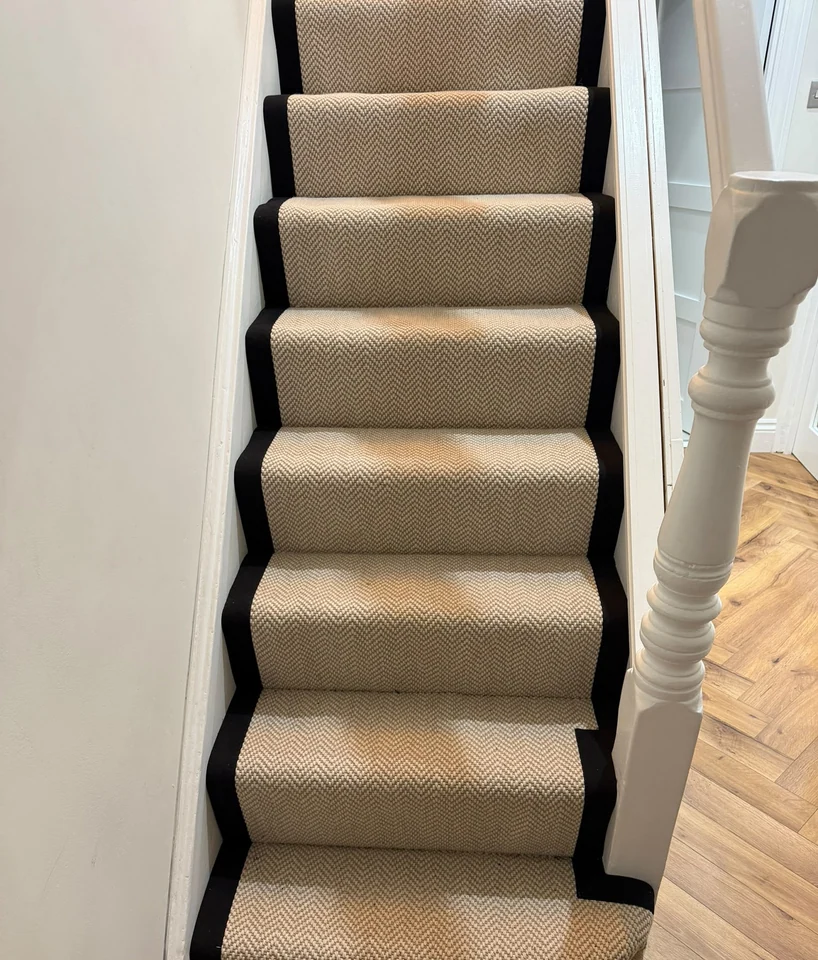
Bedroom comfort comes from the carpet surface and the support beneath it. A soft swatch does not tell you how the finished floor will feel when you get out of bed. Compare the complete combination, then check it against doors, furniture and the room's practical requirements.
Name the comfort you actually want
Think about the sensation you enjoy in a bedroom. A yielding step, a soft fibre against bare feet and a visibly deep pile are related but different preferences. Tell the supplier which matters most. You may find that a relatively compact surface over a suitable underlay feels more comfortable than a deep pile supported in the wrong way.
Try samples on the floor rather than judging them in your hand. Compare like-for-like conditions and, where practical, a larger display that allows a few steps. View the carpet after it has been touched or walked on. Its normal pile movement and light reflection should be part of the appeal, not a surprise after fitting.
Treat the underlay as a specification
Ask for the proposed underlay's exact reference and why it suits the carpet and room. Cormar's underlay guidance stresses consistent support and recommends new underlay with a new carpet. Do not assume that an existing layer remains suitable because its surface looks intact. Its condition and compatibility need assessment before the new carpet is ordered.
Discuss firmness and thickness without using either as a simple quality ranking. The combination must support the chosen construction and work with the installation method. A bedroom and staircase can need different solutions even when they share a carpet colour. If different supports are proposed, ask how the transition at the doorway will be resolved.
Balance softness with the room's daily use
Mark the bed, dressing table, wardrobes and any desk on the room plan. Heavy furniture, small feet and a chair moving in one place create different demands from the open route around a bed. Discuss appropriate protection and the carpet's approved use with the supplier. A rarely used guest room and an everyday dressing space may justify different priorities.
Think about cleaning access beneath furniture and the vacuum recommended for the chosen pile. A deep, soft surface may need compatible equipment and settings. Keep the actual routine in mind, particularly in a room with pets or frequent use. A comfortable floor should be one you can maintain as well as one you enjoy on the first morning.
Check the complete floor height and heating
Carpet, underlay and any substrate work affect the finished height. Measure door clearances, wardrobe doors and the transition to the landing. Confirm who handles any necessary door adjustment and how edges will be finished. These practical details should be included in the quotation before fitting day, rather than discovered after a thicker combination is installed.
If the room has underfloor heating, obtain the carpet and underlay thermal-resistance information and check the complete assembly with the flooring and heating guidance. Do not select extra insulation on softness alone or assume one universal limit applies to every system. Keep the approved product references, installation instructions and care guide with the finished-room documentation.