Wool and synthetic are useful starting categories, but they do not describe a finished carpet completely. Fibre, blend, pile construction and the way a room is used all influence the decision. Compare named products and their supporting information before deciding which belongs in your interior.
Find out what the label really describes
Ask for the full pile composition in writing. A wool-rich blend differs from pure wool, and synthetic may refer to polypropylene, polyamide or another fibre. A percentage blend alone does not tell you how densely the pile is constructed or which uses the manufacturer approves. Keep the actual product reference alongside every sample so comparisons stay accurate.
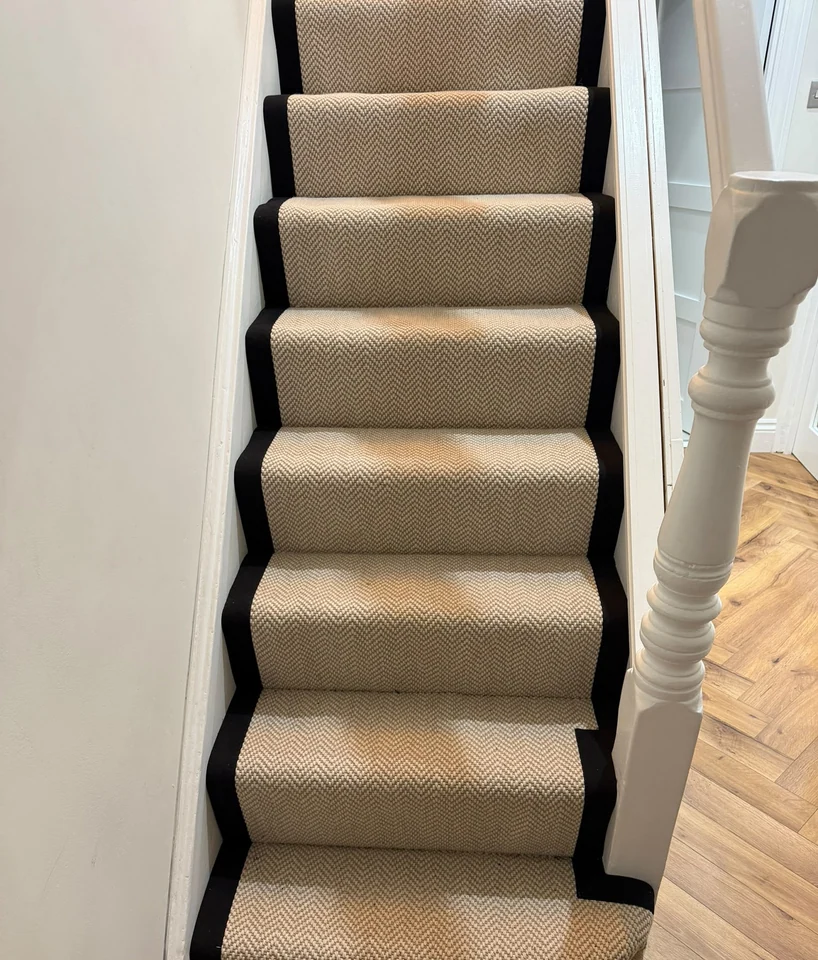
Cormar's fibre guidance distinguishes natural wool, wool blends and several man-made fibres. Its discussion of wool resilience and polypropylene stain resistance describes useful characteristics, but neither characteristic settles every project. Avoid describing an unidentified carpet in a photograph as wool, or treating a wool-like texture as evidence of composition.
Compare appearance and feel separately
Place the samples flat on the same surface and view them in daylight and artificial light. A fibre's feel, the yarn and the pile structure work together, so two carpets within the same category may appear quite different. Look at surface definition and the way the colour changes when viewed from opposite sides of the sample.
Then compare them over the underlay intended for the room. A small swatch pressed between your fingers does not reproduce the installed experience. If softness is a priority, say what you mean: a plush surface against bare feet, a cushioned step or a relatively firm texture. These are different preferences and can lead to different specifications.
Match care to the household
Describe pets, external access, children, food and the likely cleaning routine honestly. Ask for the manufacturer's guidance for each shortlisted product before buying. British Wool advises prompt blotting of liquid spills and appropriate wool-safe cleaning products. Some specific synthetic ranges permit other treatments, but that permission should never be transferred to an unknown carpet or its binding.
Read what a stain or wear warranty actually covers rather than using its headline duration as a quality score. Different marks, wear mechanisms and maintenance conditions may be treated differently. Keep the written care guide accessible after installation. A carpet that fits your real maintenance routine may serve you better than one selected on a broad claim about a fibre.
Choose the complete specification
For stairs and heavily used routes, confirm suitability for the precise product and proposed fitting. A carpet that works beautifully in a bedroom is not automatically appropriate for a stair runner. Construction, available width, pattern, binding compatibility and underlay can all affect the result. Ask for the specification to cover the complete installation rather than the pile alone.
Compare quotations on that same basis: product, measured quantity, preparation, underlay, fitting and any edges or transitions. Record the genuine fibre information without adding unsupported environmental, health or durability claims. A well-chosen wool or synthetic carpet should earn its place through clear product facts and a convincing sample, not a hierarchy assumed from the category name.