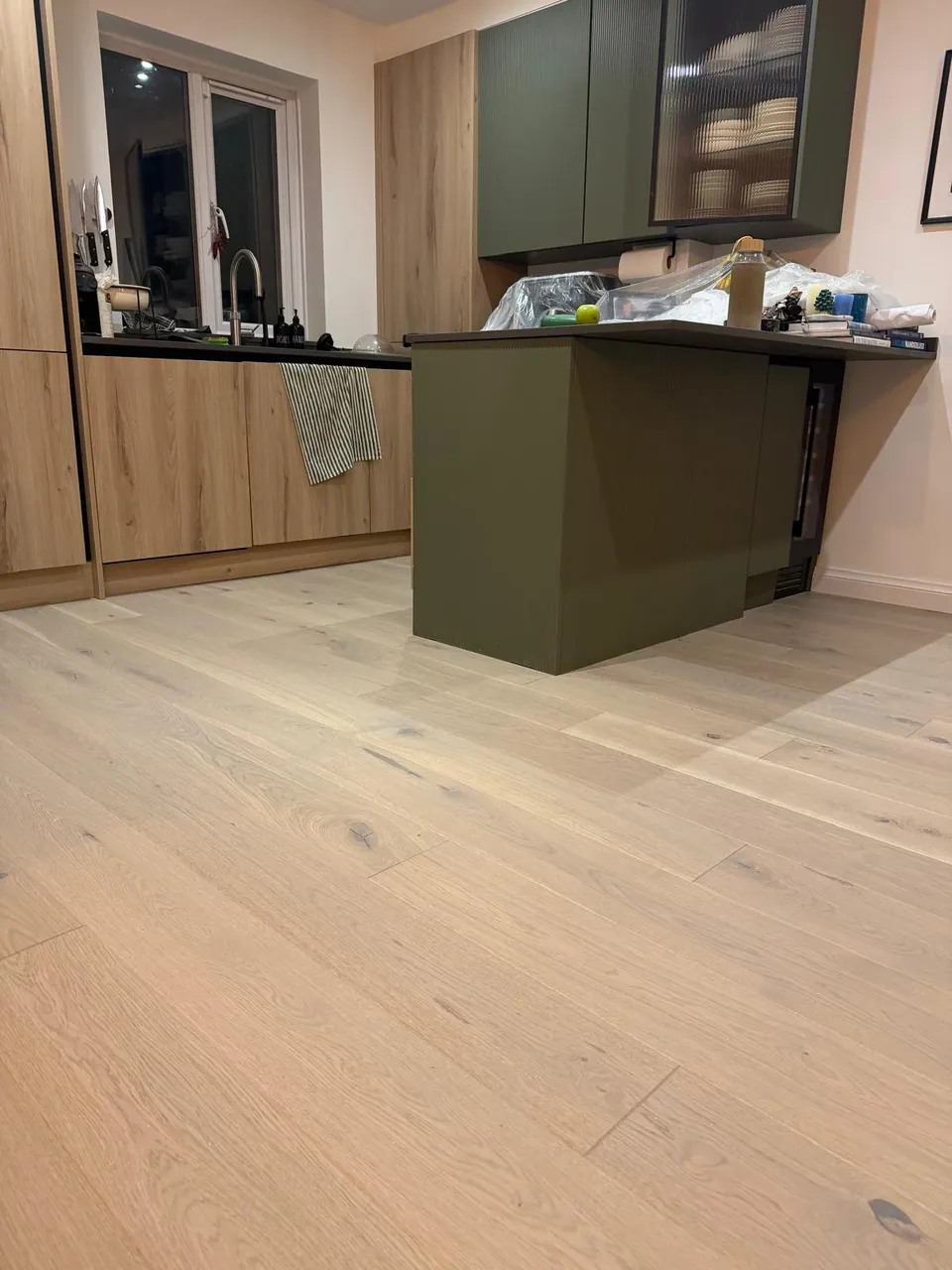
A deep brown or softly shaded timber floor can bring an interior together, but the small sample may show only one part of its colour range. Understanding how the tone is produced helps you decide whether the variation is a feature you welcome or a mismatch with the intended scheme.
Ask how this particular colour is made
Manufacturers use smoking, fuming, stains, pigmented finishes and combinations of treatments. Names such as smoked oak describe a family of appearances rather than one controlled shade. Ask which processes the selected product uses and whether its data sheet flags wider variation. The answer should refer to the exact floor, not a general explanation borrowed from another range.
Havwoods notes that reactive smoked or fumed products can show a wider colour range. That is useful context when comparing a richly shaded floor with a more even-looking stained option. Avoid treating either method as a quality hierarchy. Your decision is whether the delivered range of tones will work with the room and whether the manufacturer explains that range clearly.
Approve the extremes as well as the average
A mid-tone swatch may sit beautifully beside the kitchen, while the lightest or darkest permitted boards create an effect you did not intend. Request more than one sample and ask for a representative panel if possible. Place the pieces together rather than viewing each in isolation. The contrast between neighbouring boards is often more significant than the exact colour of one piece.
Keep the surrounding materials honest too. Use the real cabinet finish and stone sample, not a phone image. If the scheme needs a very narrow tonal range, tell the supplier before ordering. Rejecting every strongly shaded board from a naturally varied product is not a dependable ordering strategy. A different specification may meet that requirement more directly and with less uncertainty.
Review colour across the day
Move the samples between the brighter and more shaded parts of the room, then inspect them under the proposed evening lighting. A brown that seems neutral beside a window may appear warmer beside certain cabinetry. Record which combinations you prefer, but keep your photographs as reminders rather than colour standards. Exposure settings and screens can make close comparisons misleading.
Wood also changes with exposure to light, so the initial sample is not a promise of a permanently fixed shade. Ask about expected change for the species and treatment. Where a large rug is planned, discuss the manufacturer's advice on exposure and care. The aim is to understand the material you are choosing, rather than expecting a natural surface to remain visually frozen.
Plan delivery approval and future repairs
Agree who will check the product on arrival and what should happen if its appearance seems outside the agreed description. Review concerns before fitting, following the supplier's claims process. Record the product reference and sample approval clearly. A busy installation day is a poor moment to discover that the designer, homeowner and installer had different expectations of acceptable variation.
Ask how repairs or renovation might affect a coloured surface. Do not assume that sanding will reveal the same shade, that colour runs through the whole face, or that a later batch will match exactly. Retaining suitable spare boards and the original specification can help future decisions. Any selective fitting or additional material allowance should be priced and agreed in advance.