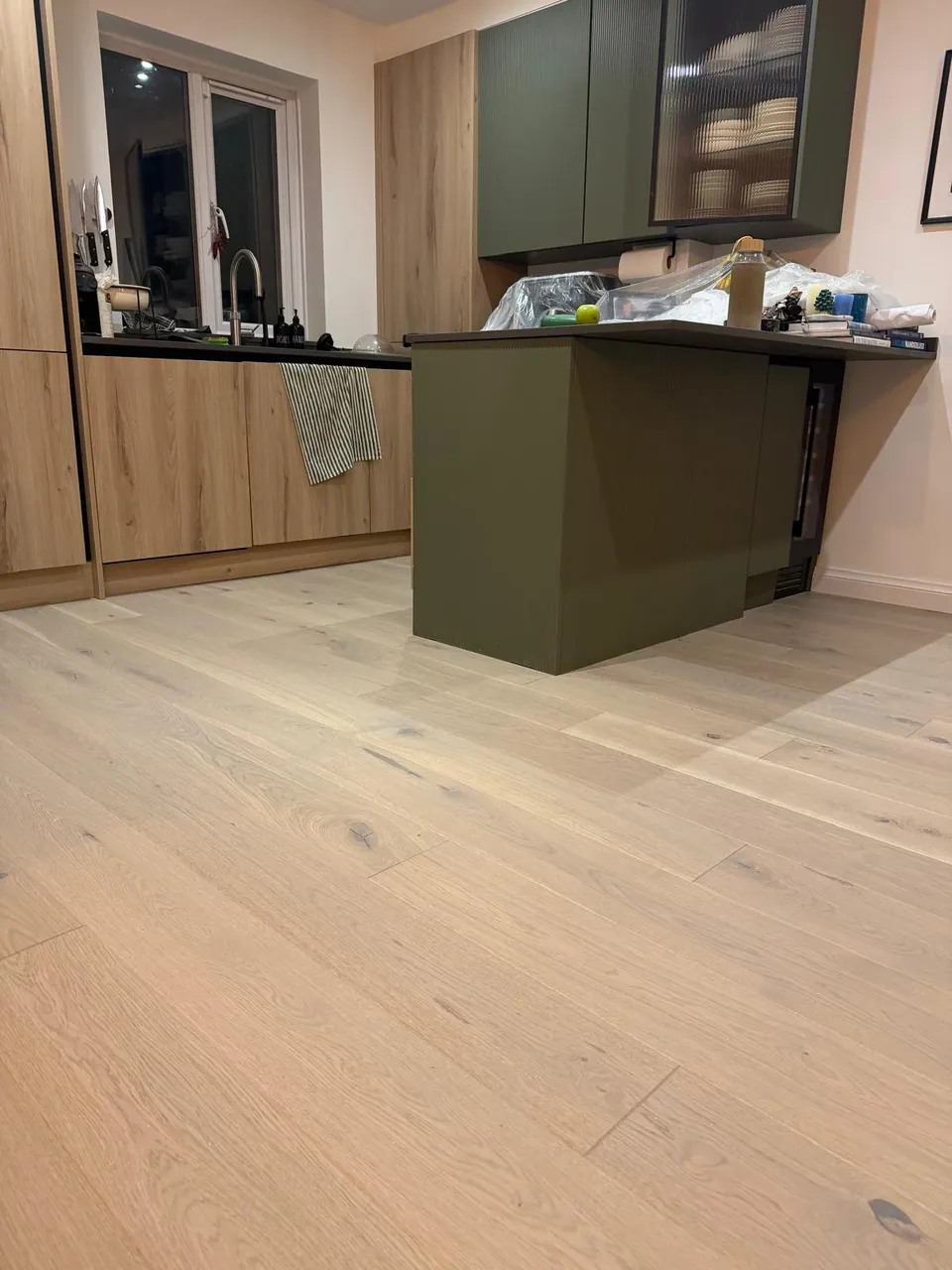
A timber floor is a material that changes with its surroundings. The sample you approve is a starting point, not a permanent colour swatch for every board. In a bright room, planning for that character is more useful than expecting the floor to remain exactly as it looked on delivery.
Understand what the sample can tell you
A small sample shows a limited selection of grain, grading and colour. It does not represent every board or predict the precise appearance years later. Ask to see a broader selection and the product's description of natural variation. Place samples flat beside the intended wall paint and joinery, looking at them at different times rather than only under showroom lighting.
Kährs' wood facts explain that species react differently to normal sunlight. Some tones can mellow, warm or soften rather than simply becoming lighter in a uniform way. Use the selected manufacturer's information when discussing expectations. A general statement that all wood fades in the same direction is not a useful description of a particular stained oak or darker timber floor.
Consider covered and exposed areas together
A rug, large cabinet or long-standing furniture arrangement changes which parts of the floor receive light. When the room is rearranged, the contrast can become noticeable. Include that possibility in the design discussion, especially if you intend a large rug beside an expanse of glazing. It is a characteristic to manage, rather than something a different cleaning product can reliably prevent.
Follow the manufacturer's advice on when to introduce rugs and whether they should be moved periodically. Kährs recommends rearranging rugs and furniture to reduce distinct exposure lines. Your room may have practical limits, so make a realistic plan. Suitable blinds or curtains can also form part of the interior brief, with advice from the relevant suppliers about the glazing and daylight conditions.
Treat a glazed room as a specific environment
Tell the flooring supplier about large south-facing windows, rooflights and rooms with substantial changes in sun exposure. Colour is only one part of suitability; the installation and environmental requirements still need checking for the chosen product. Share the heating arrangement and normal room use so the recommendation is based on more than a photograph of a bright interior.
Do not assume a UV-related finish claim means there will be no colour change, or that a particular type of glass removes every consideration. Ask for the scope of the exact manufacturer's statement. Where furniture, curtains and floor tone are closely coordinated, consider a palette that remains comfortable with some natural variation rather than relying on a perfect permanent match.
Keep future matching expectations realistic
Retaining spare boards can be useful for a future repair, but storage means they may age differently from the installed floor. A replacement from the original batch may therefore look distinct at first. Keep labels and product details, and ask an installer to compare the actual boards before a repair. Material identity and visual match are related questions, not the same guarantee.
If a colour difference appears suddenly, affects a small damp area or follows a cleaning treatment, do not automatically blame normal light exposure. Record the location and history and obtain advice before trying to recolour it. Understanding natural change helps set expectations, while a careful assessment prevents a different issue from being dismissed simply because the surface is made of timber.