Call 07704 305101Get a quote
Materials & finishes · 4 minute read

What do wood floor grades mean?

The answer

Wood grade generally describes the permitted natural features and variation, rather than a simple ranking of durability. Read the individual manufacturer's definition: labels such as prime, select, nature and rustic are not a universal visual standard. Ask to see multiple boards, including the more varied examples allowed. Choose the character that works across the room, with its joinery and furniture, rather than approving one unusually uniform sample.

Specification check

Approve the permitted range of character

Look atAsk forAvoid assuming
Knots and checksWritten limits for the selected grade.Grade names mean the same across suppliers.
Filler and sapwoodRepresentative high-contrast boards.One clean sample describes the whole delivery.
DistributionAgreed selection and installation procedure.Every dramatic board can be discarded without consequence.
Optional project preference

How much natural character do you want?

Select one consideration to include in your quotation request. This records a preference; it does not approve a product or installation.

How much natural character do you want?

Choose the consideration that applies to your project.

A floor can be beautifully made and full of knots, or equally well made with a quieter grain. Grade is part of that appearance decision. For a higher-value interior, choosing the right amount of character matters more than assuming the cleanest-looking board must always be the best.

Look beyond the word on the label

Manufacturers describe grade using features such as knots, sapwood, grain and colour variation. Some allow filled features and visible checks within stated limits. The detail of that definition matters. A grade name from one supplier is not enough evidence that another supplier's floor will look the same, even when both products use the same timber species.

Request the written grade description while shortlisting, rather than after delivery. Ask which features the sample does and does not show. If a floor is presented in a very clean photograph but permits conspicuous variation, discuss that gap now. The aim is an informed expectation, with enough evidence to decide whether the full permitted range belongs in your home.

Balance character against the rest of the room

Start by listing the strongest surfaces: a veined worktop, figured cabinetry, a patterned rug or textured plaster. Several expressive materials can work together, but they need a deliberate relationship. A quieter floor may give stone more prominence; a characterful floor may provide welcome movement beneath plain walls. Neither choice is inherently more luxurious than the other.

Consider where the eye will rest. A highly varied board beside an island or across a broad doorway can become a feature, while the same board may be almost hidden beneath a dining table. This is a reason to review the appearance across several pieces, not a promise that every conspicuous feature can be placed out of sight during fitting.

Inspect filler and contrast, not only knots

A small dark knot can be visually stronger than a larger low-contrast feature. Look at the colour of any filler, the contrast between adjacent boards and the amount of pale sapwood shown in the approved range. Compare samples from standing distance as well as close up. A surface that seems busy in the hand may become balanced across a larger area.

If strong contrast would trouble you every day, put that concern into the specification. Ask whether a different grade or finish better meets it. Do not order a characterful product on the assumption that the installer will discard every dramatic board: that changes the usable quantity and may conflict with the manufacturer's intended appearance. Any selective approach needs agreement before ordering.

Approve a range and plan its distribution

A useful approval records the product, grade definition and several representative boards, with photographs as a supporting record. Screens and photographs do not replace physical samples, but they can help everyone remember what was discussed. Ask whether a display panel or larger sample area is available. This is particularly worthwhile when a floor will run through several connected rooms.

Before fitting begins, agree how boards will be considered together in line with the product instructions. Review any genuinely unexpected material before it is installed and follow the supplier's process. Setting out is an opportunity to make a coherent whole, while natural variation remains part of the purchase. That distinction protects both the design intent and a realistic understanding of timber.
Before you request a quote

Approve the character, not one plank

  • Obtain the supplier's written grade definition.
  • See the strongest permitted knots and tonal changes.
  • Check filler colour and pale sapwood contrast.
  • Compare with the room's most expressive materials.
  • Agree any selective-board requirement before ordering.

More questions about this topic

Is rustic grade a lower-quality floor?

The label usually indicates a more characterful appearance. It does not, by itself, establish manufacturing quality, suitability or durability. Evaluate those separately through the exact construction, product specification and installation requirements.

Can I request a floor without any knots?

Ask the supplier for the closest appropriate specification and its written tolerances. Even a restrained grade may permit small natural features. If absolute uniformity is essential, make that expectation clear before selecting a natural timber product.

Product guidance and sources

Content reviewed 29 November 2026

Manufacturer grade definitions and delivered variation must be checked for the exact product.

Use the current instructions for the exact product and installation system. The planning guidance here does not replace the property assessment.

Request a flooring quotation

Get a quote for your project

Send your rooms, postcode and selected product if known. Add the consideration above when it is relevant to your enquiry.

Tell us about your floor

Get a flooring quote

Choose your flooring and the help you need. Then add your contact details and project postcode.

A useful first conversation

Your rooms and the look you want. The condition of the existing floor. The details that matter to you.

Both fitting only and supply & fit can be explored. Final scope, coverage and availability need confirmation.

Request a flooring quote. No exact measurements needed.

Project enquiry

Flooring quote

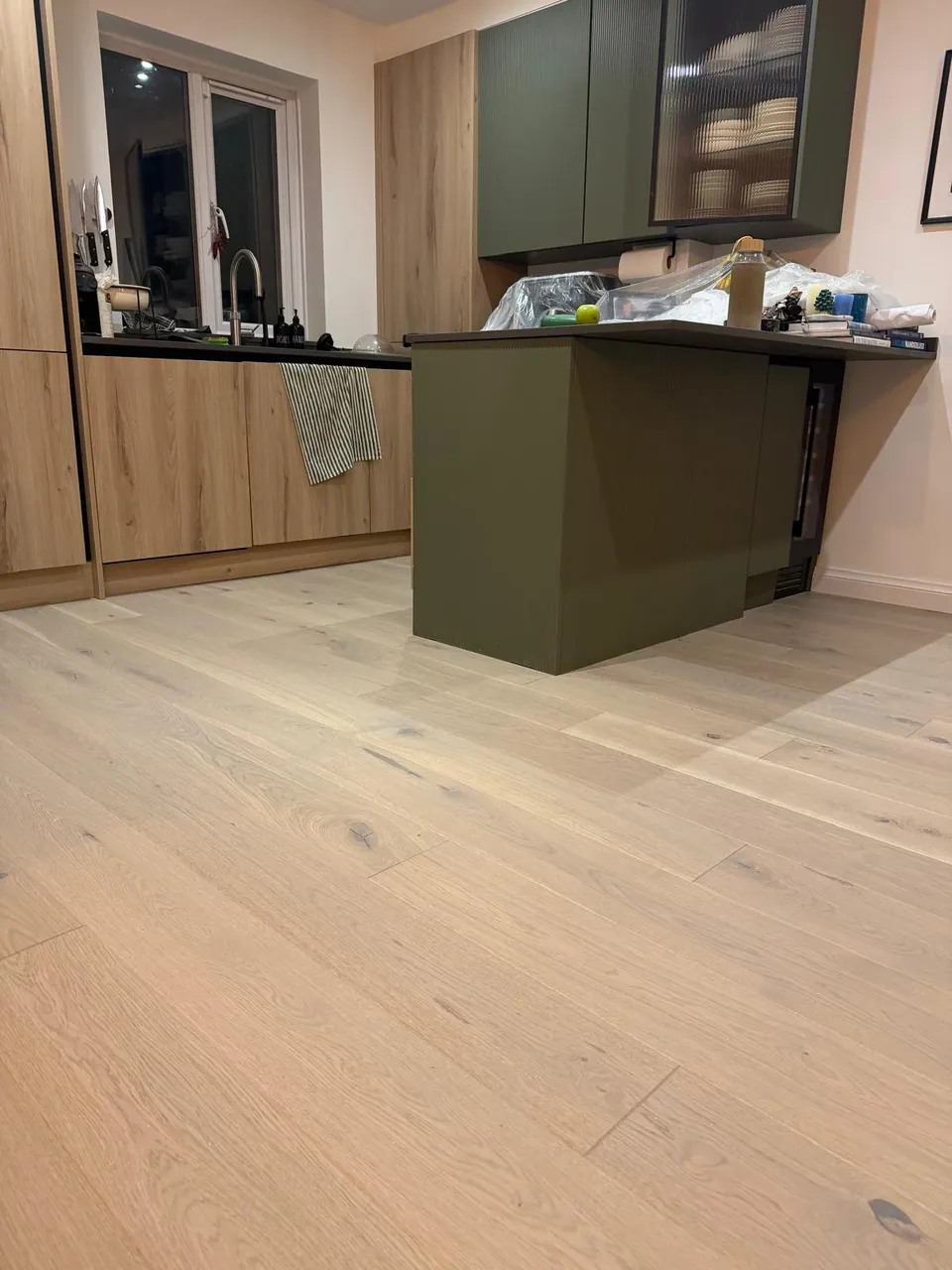
Pale engineered wood planks around a green kitchen island and timber cabinets
Alis project library · Used with permission
1 of 3 · Your floor
Which floor are you considering?

Choose a starting point. You can change your mind.

No exact measurements needed.
Call 07704 305101Get a quote