Call 07704 305101Get a quote
Materials & finishes · 4 minute read

Should I choose brushed or smooth wood flooring?

The answer

A brushed surface emphasises the timber grain; a smooth surface offers a more even tactile plane. Neither determines the protective finish or guarantees easier care. Compare real samples at floor level, look across them towards the window, and ask for the exact care guidance. A lightly brushed matt floor may feel restrained, while deeper texture or more sheen can make the grain a stronger part of the room.

Side-by-side comparison

Separate texture from protective finish

DecisionBrushed surfaceSmooth surface
TextureEmphasises the grain's relief.Offers a more even tactile plane.
LightInspect the relief under side light.Inspect sheen and reflections under the same light.
CareUse guidance for the exact texture and finish.Use guidance for the exact finish; smooth does not mean maintenance-free.
Optional project preference

Which surface should we compare for your room?

Select one consideration to include in your quotation request. This records a preference; it does not approve a product or installation.

Which surface should we compare for your room?

Choose the consideration that applies to your project.

Texture is often missed when flooring is chosen from a photograph. Yet the surface you feel underfoot and see in low daylight can change the entire impression of a room. Brushed and smooth timber deserve a physical comparison alongside the finish, rather than a quick decision from their names.

Separate texture from finish

Texture describes the worked surface; oil or lacquer describes its protective treatment. Manufacturers can combine these in different ways. A brushed board may be lacquered, and a smooth board may be oiled. Read both parts of the specification. If you prefer one sample, identify whether it is the relief, the colour or the sheen that is doing the work.

Try a comparison with as few differences as possible. Put a smooth and a lightly brushed sample in similar tones beside the same cabinet door. Then repeat with the finishes you are considering. It is easier to make a clear decision through these small controlled comparisons than by setting several unrelated samples against one another and hoping a favourite emerges.

Let daylight reveal the surface

Brushing brings definition to grain, which can become particularly visible where light crosses the surface from low glazing. Inspect a sample from the far side of the room as well as directly above it. Turn it through the proposed laying direction. The room's light may give a subtle texture more presence than it had under showroom lighting.

A smoother floor may suit an interior with precisely detailed joinery or a stronger patterned textile. A brushed surface may introduce welcome tactile interest in a restrained scheme. These are design judgements, not fixed rules about modern or traditional homes. Think about the level of visual activity you want on the floor once the room is furnished and in use.

Ask what everyday care will involve

Request the care instructions for the exact combination of texture, colour and finish. Ask what tools and cleaners are permitted, how frequently the finish should be assessed, and what to do when dirt remains in the surface. Do not test samples with improvised chemicals or abrasive pads unless the supplier has authorised that method and can explain the result.

Consider your own routines. Entrance grit, dining-chair movement and a kitchen route may matter more than whether a surface feels slightly textured in the hand. Plan suitable matting and furniture protection with either option. If you use a cleaning service, give them the product guidance. A clear routine is more useful than a broad claim that one texture hides everything.

Understand the future appearance

Renovation may alter a deliberately worked surface. Before assuming the floor can simply be sanded back to the same look, ask what the manufacturer allows and what a specialist could recreate. The question is especially relevant for a combination of brushing and coloured treatment. Maintaining the chosen finish may be preferable to waiting until a more extensive intervention is needed.

Keep a labelled sample, the product reference and the maintenance sheet with your project record. If matching stair details or joinery are planned, compare their actual texture too. The floor does not have to imitate every timber surface, but the relationship should feel intentional. Approving those details together gives the finished room a stronger sense of consistency.
Before you request a quote

A useful texture comparison

  • Read texture and protective finish as separate details.
  • Look across samples towards the main source of daylight.
  • Feel the surface and inspect it from standing distance.
  • Ask for care and renovation guidance for the exact finish.
  • Compare matching trims and other nearby timber details.

More questions about this topic

Does brushed wood have to look rustic?

No. The depth of brushing, grade, colour and sheen all influence the result. A restrained grade with light texture can feel very composed. Judge a group of boards rather than assuming all brushed floors share one appearance.

Will texture prevent scratches?

No texture should be treated as scratch-proof. Visibility and repair options depend on the finish, colour, light and damage. Follow the manufacturer's care guidance and use suitable measures to reduce grit and furniture abrasion.

Product guidance and sources

Content reviewed 29 November 2026

Texture alone does not prove easier care or whether renovation will reproduce the original appearance.

Use the current instructions for the exact product and installation system. The planning guidance here does not replace the property assessment.

Request a flooring quotation

Get a quote for your project

Send your rooms, postcode and selected product if known. Add the consideration above when it is relevant to your enquiry.

Tell us about your floor

Get a flooring quote

Choose your flooring and the help you need. Then add your contact details and project postcode.

A useful first conversation

Your rooms and the look you want. The condition of the existing floor. The details that matter to you.

Both fitting only and supply & fit can be explored. Final scope, coverage and availability need confirmation.

Request a flooring quote. No exact measurements needed.

Project enquiry

Flooring quote

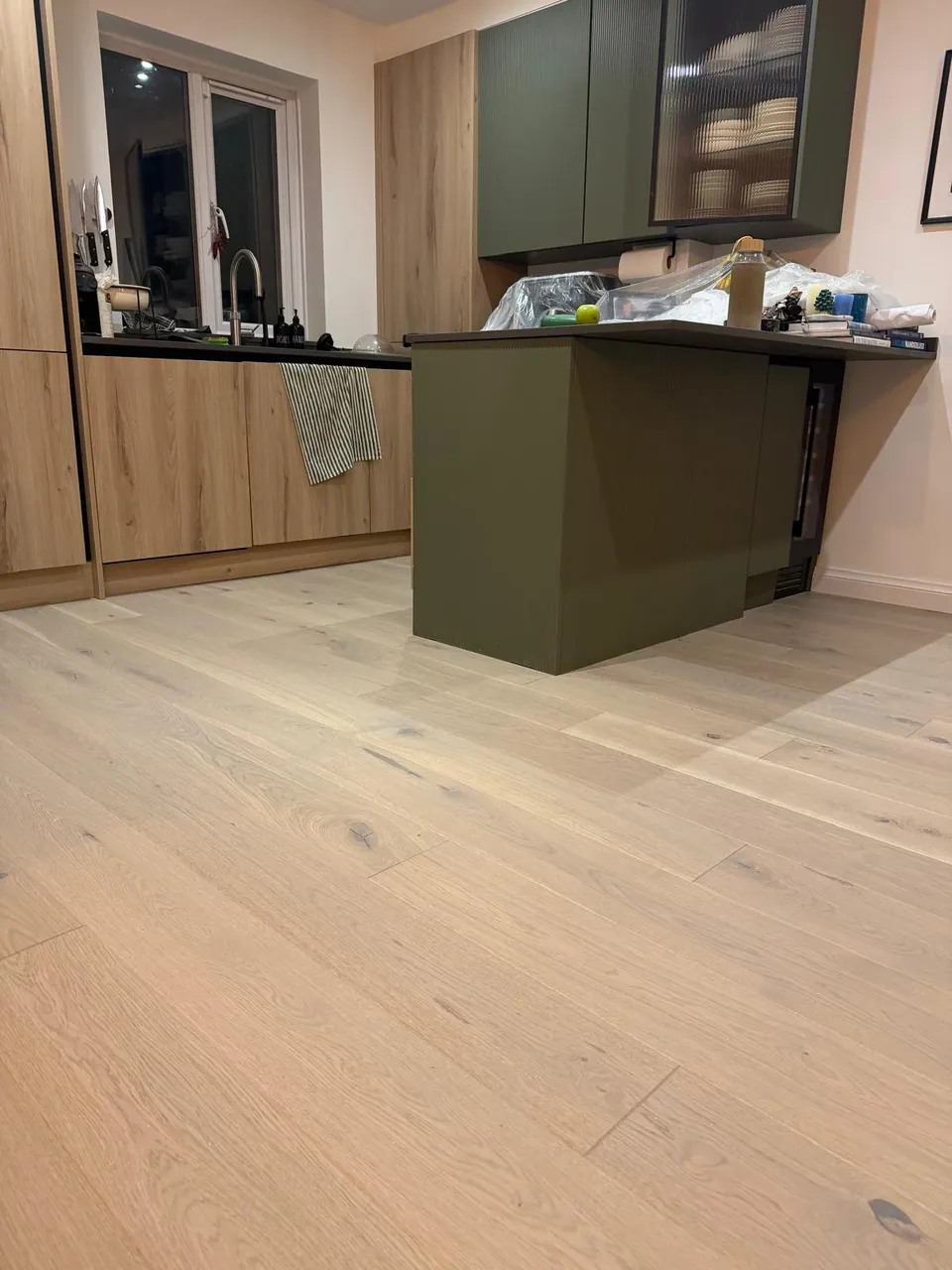
Pale engineered wood planks around a green kitchen island and timber cabinets
Alis project library · Used with permission
1 of 3 · Your floor
Which floor are you considering?

Choose a starting point. You can change your mind.

No exact measurements needed.
Call 07704 305101Get a quote