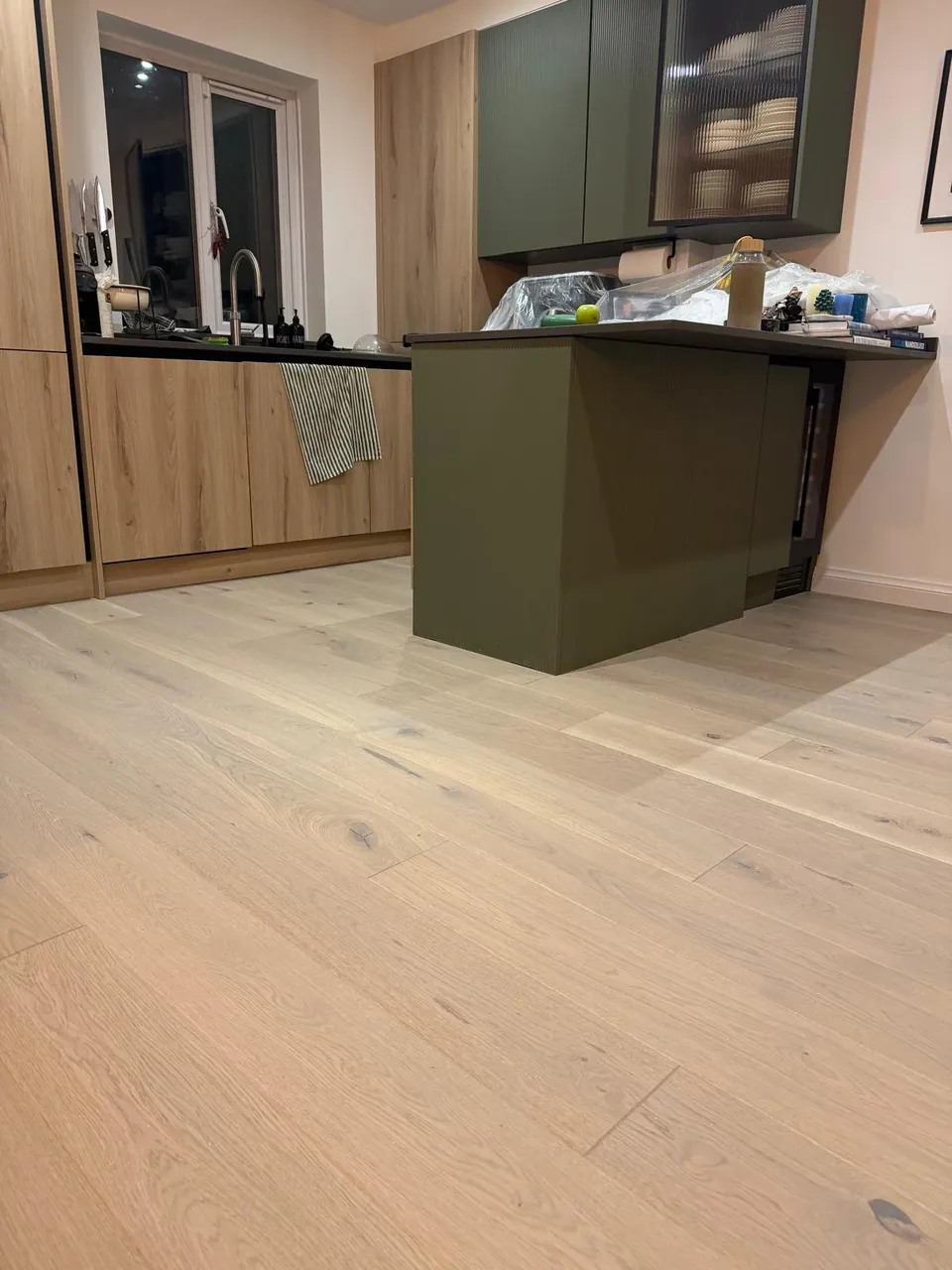
Two timber floors can look equally matt and still need different maintenance products. The finish, rather than sheen alone, should guide the care routine. Keep the product information from installation so cleaning begins with a known specification, instead of a guess based on how the grain feels underfoot.
Identify the finish before choosing a bottle
Find the flooring invoice, product label or handover guide. If the floor was refinished, the original product name may no longer describe the surface treatment. Ask which finish is now present and what maintenance has already been applied. An extremely matt lacquer can resemble an oiled surface, so appearance alone is an unreliable basis for buying care products.
Avoid experimenting with water tests, solvents or a series of household remedies on an unknown finish. Send the supplier or a flooring professional the available product information and photographs first. If a trial is recommended, follow the specified method in a discreet location. Establishing the finish is a more useful first step than trying to remove a mark with increasingly aggressive cleaners.
Keep the routine simple and compatible
Remove loose grit with suitable dry-cleaning equipment and use the approved damp-cleaning method when needed. Check the cleaner's dilution and application instructions rather than adding more because an area looks dirty. A small, regular routine is easier to maintain than allowing a film to build up and then attempting a stronger whole-room treatment.
Deal with spills promptly and keep entry dirt under control. Check furniture pads and suitable mat backings as part of the same routine. These are practical ways to reduce avoidable wear, but they do not make the surface immune to damage. A recurring mark near a chair or entrance is also a reason to examine the source, not simply increase cleaning frequency.
Separate cleaning from maintenance of the finish
Bona's guidance for oiled floors distinguishes routine cleaning from periodic oil-related maintenance intended to replenish the surface. The appropriate product and timing depend on the existing finish and its condition. Do not choose an oil treatment solely because the floor appears dull; establish whether the dullness is dirt, residue, wear or something else first.
Lacquered floors have their own compatible care and renovation systems. A product intended to build up a maintenance layer should not be treated as an everyday cleaner. Bona's polish information, for example, limits the intended finish types. Read the actual technical information and the flooring manufacturer's recommendations together before adding a treatment that may affect future maintenance or recoating.
Recognise when a mark needs assessment
Deep scratches, dark staining, lifting finish or a repeatedly damp patch need a different decision from ordinary surface dirt. Record when the issue appeared and which products have been used. Explain whether it follows a spill, furniture movement or building work. That history helps an assessor distinguish a local cosmetic issue from a problem that needs a wider response.
Keep a small care record with the flooring documents: cleaner, maintenance products and dates of any treatment. If renovation is proposed, ask what appearance can realistically be achieved and whether a local repair will remain visible. A suitable routine should preserve the selected finish while leaving a clear route for future care, rather than accumulating incompatible layers over an unidentified surface.