Layout
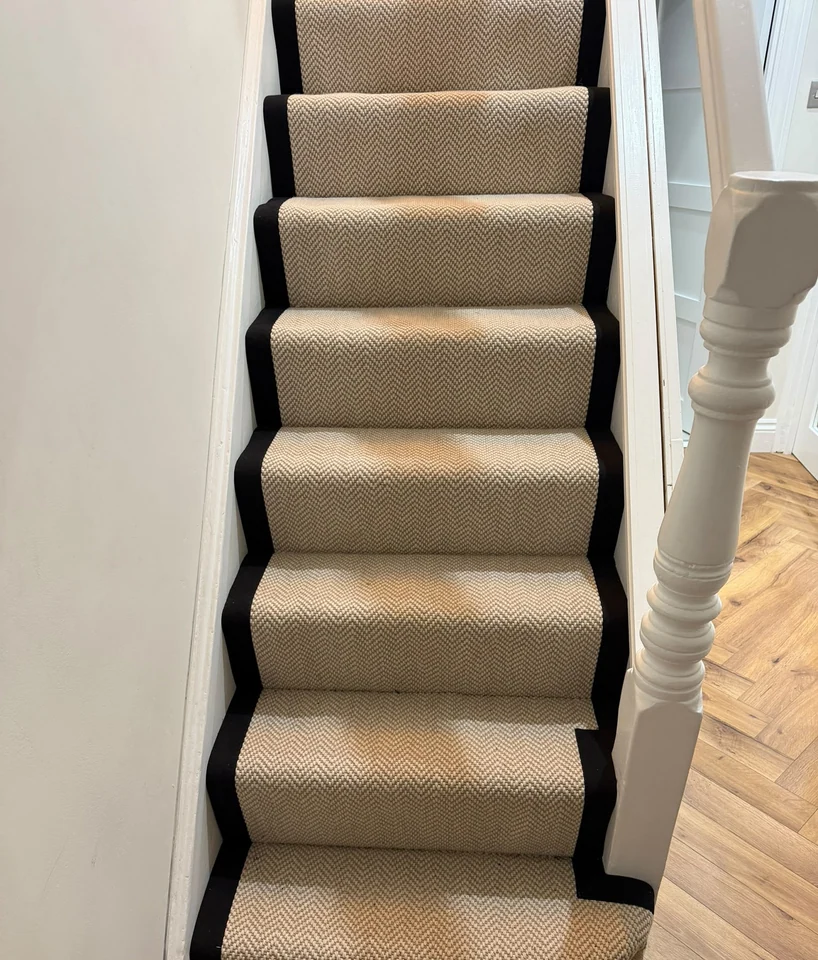
Photograph the flight from below and above, adding the landing and any shaped bottom step. Consider how much painted or timber stair you want visible and compare that proportion at several levels. A contrasting edge makes the route very clear; a tonal edge creates a quieter outline. If the stairs turn, ask how the runner will follow the winders and whether the margins change. The route should be agreed before decorating, because the exposed area may differ from the straight-flight impression.
Specification
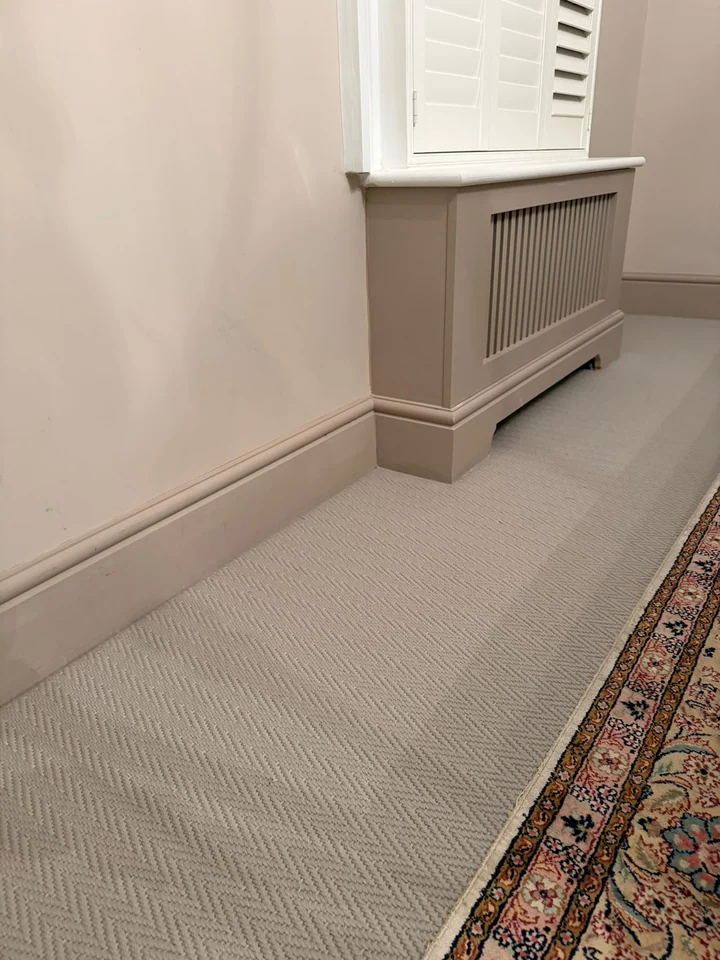
The exact carpet must be suitable for the staircase, proposed edging and any turning-step method. A flexible flatweave and a thicker tufted construction need their own fitting guidance, so inspiration images should not be treated as interchangeable instructions. Specify appropriate underlay and fixing with the selected product, and identify any necessary stair repairs separately. Do not rely on decorative rods to compensate for an unresolved installation. Include the top junction with the landing floor, checking the whole build-up and a secure finish at that meeting.
Quotation
Ask for a measured stair and landing plan before the carpet is cut or bound. The scope should identify carpet, edging, supporting products, fitting, stair preparation and any transition components. State who will complete decoration and when the finishes will be ready for installation. If the landing or bedrooms form a later stage, record how the current work stops properly and how future work might connect. Confirm who approves the runner route, width and binding example so the final order represents the complete staircase rather than a collection of separate choices.