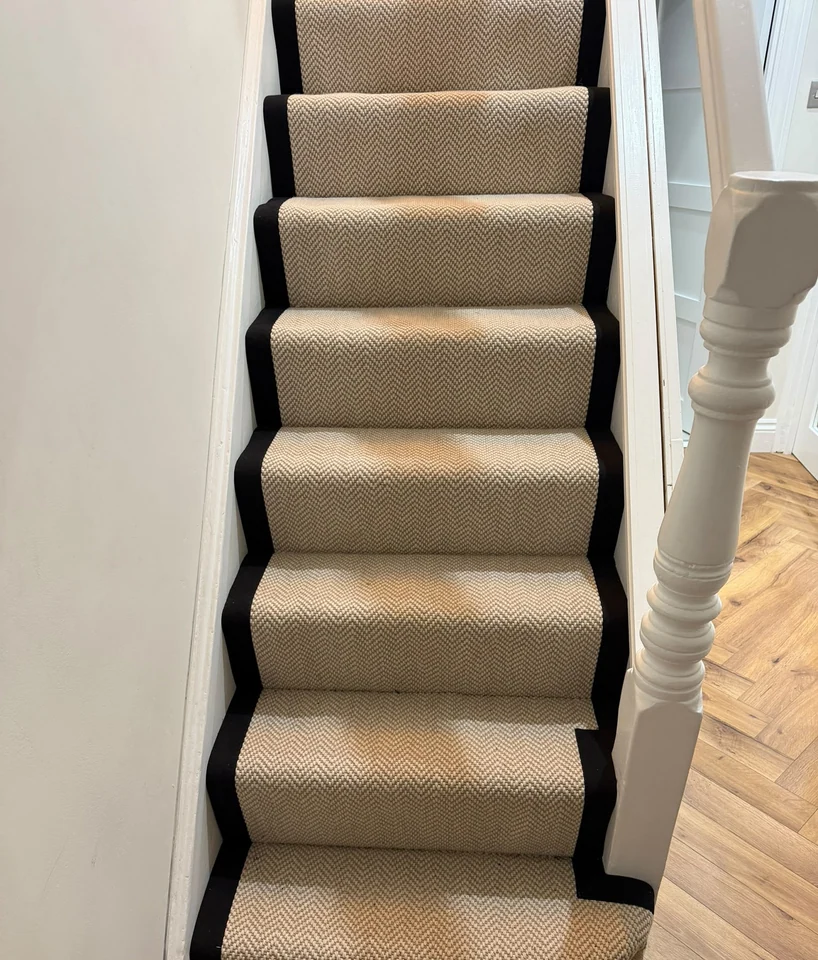
A winding staircase asks a runner to change direction across shaped treads. The carpet that looks straightforward on a straight flight may need a very different cutting and fitting approach here. Start with the turn itself, then choose the construction and visual detail around it.
The turn determines the plan
Photograph the staircase from the hall, the landing and directly above the turn where this can be done safely. Show the bottom step, newel posts and any intermediate landing. At the survey, the fitter needs the shape and dimensions of each turning tread, not just a step count or the overall height of the staircase.
Look at how the intended runner route connects the flights. On winders, the visible margins may change as the carpet follows the turn. Decide which views should feel most balanced and ask the installer to explain the proposed route. A drawing or suitable previous example of the method is more useful than a promise of identical margins on every shaped step.
Choose a construction that can follow
Confirm stair and winder suitability with the carpet supplier before committing to a colour. Roger Oates recommends its flexible flatweave for winding stairs and emphasises experienced fitting. That advice applies to its material; it does not establish that every flatweave or every carpet can follow your staircase. The exact product, width and pattern remain essential information.
Discuss thickness, edge finish and the appearance over the stair nosing together. Alternative Flooring describes different fitting styles and explains that construction can influence the appropriate choice. Ask for a clear description of the intended result on your steps. A style selected from an inspiration image may be incompatible with the carpet you are actually ordering.
Plan stripes, texture and binding through the bend
Directional stripes make changes in alignment particularly visible. Establish where they will meet and how the transition will look from both flights. A plain texture may create a quieter effect, but its edge still needs careful planning. Do not assume that a pattern matching beautifully on a straight tread can turn without joins or other considered adjustments.
A contrasting border highlights the route around the winders. Compare it with a tonal edge if you prefer the turn to feel less emphatic. Confirm whether the binding is applied before installation or as part of another agreed process, and how the selected method resolves each corner. All quantities should follow the actual cutting plan.
Prepare the staircase for the proposed route
Complete agreed repairs and decoration before the runner is installed, allowing finishes to cure appropriately. Because exposure can differ across turning steps, narrow strips of paint based on the straight-flight margins may be insufficient. Decide the full area to be finished with the installer after the route has been reviewed, rather than discovering bare patches during fitting.
The written scope should include carpet, binding where relevant, specified underlay, fixing method and any preparation. Keep decorative accessories separate from the essential installation specification. Agree a final inspection with attention to the turn and all exposed edges. A satisfactory runner should follow a buildable plan, rather than rely on appearance alone.