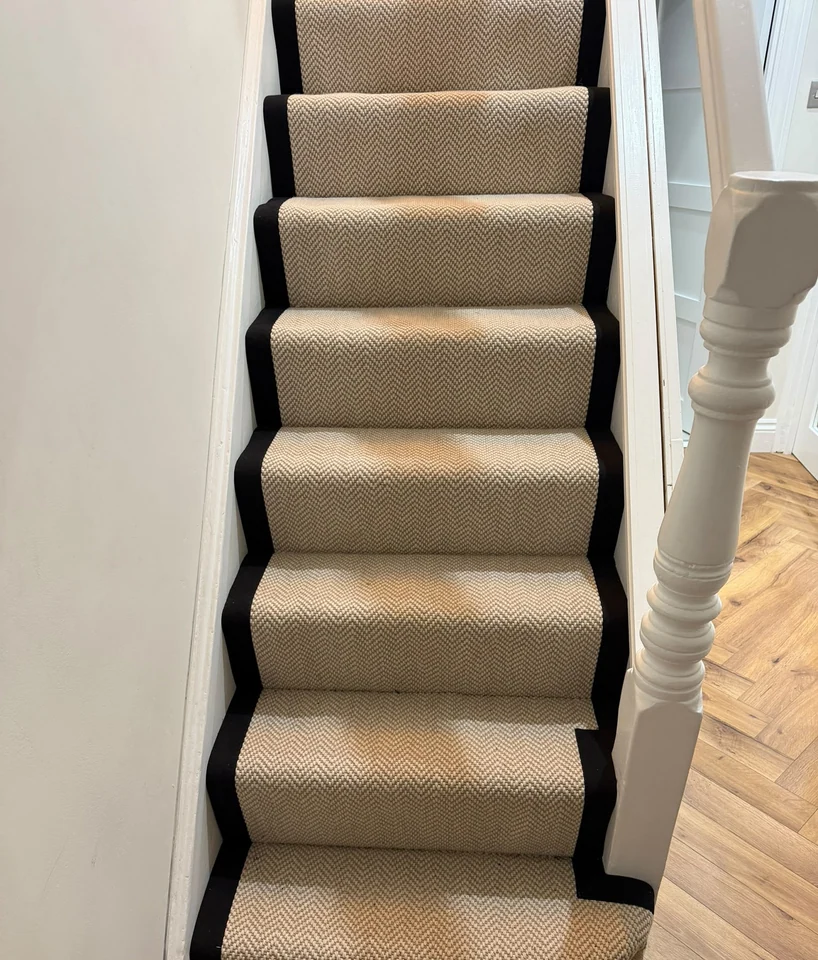
A runner's edge can be a quiet finish or the line that defines the whole staircase. Colour matters, but so do the binding's visible width, material and corner treatment. Look at the edge as part of the finished runner, rather than choosing from a separate colour card.
Decide how much outline you want
Begin with the role of the staircase in the interior. If the hall already has strong wallpaper, patterned tiles or decorative balusters, a close tonal edge may let the carpet texture do the work. In a restrained space, a contrasting line can provide the definition. Neither approach needs to be justified as more luxurious; it is a question of visual balance.
Assess the runner from the bottom of the stairs, where its outline may be seen over the whole flight. Then look from above, where the relationship to the landing becomes clearer. A colour that looks subtle on a small swatch can become a repeated graphic line across many steps. Compare complete combinations at these normal viewing distances.
Compare real edges, not colour alone
Ask for an example of the actual edging method on a compatible carpet. A woven fabric band, a whipped yarn edge and a piping-style system have different appearances. Stairrods describes its Easybind and Easypiping products as particular edging options; they should not be treated as identical to every stitched binding. The fitter should confirm which method suits the proposed runner.
Specify what will remain visible after the edge is formed, because the material's supplied width and its finished visible width are different questions. A wide border can reduce the apparent central carpet area. Ask how the edge will sit at corners and on turning steps, and whether a sample can show the proposed finish before manufacture.
Build the colour relationship in the room
Place carpet and edging samples beside the actual stair paint or timber finish. Include the hall floor and handrail if they form a strong part of the view. Compare undertones in daylight and artificial light. A charcoal binding can read differently beside cool white paint than beside warm ivory, even if both combinations looked similar online.
A connection can be more subtle than an exact match. The border might echo the depth of a handrail colour or a tone in nearby upholstery without copying either. Fibre Flooring offers several border materials and plain or patterned options, illustrating how texture can change the effect. Check the current compatible choices rather than assuming every colour exists in every finish.
Think about the edge in daily use
Ask for care instructions covering the carpet and edging together. A cleaning method approved for the pile may not automatically suit every binding material. Discuss where shoes, pets or repeated contact are likely, and choose a combination you are comfortable maintaining. A dark border is a design choice, not a guarantee that wear or soiling will never show.
Keep the final specification precise: carpet reference, finished runner width, edging product, colour, visible width and the landing detail. Include who measures, cuts, binds and installs it. If the carpet is being supplied by someone else, agree responsibility for compatibility before cutting. Once a bespoke runner has been made, changing its border can be substantially more involved than changing a loose sample.