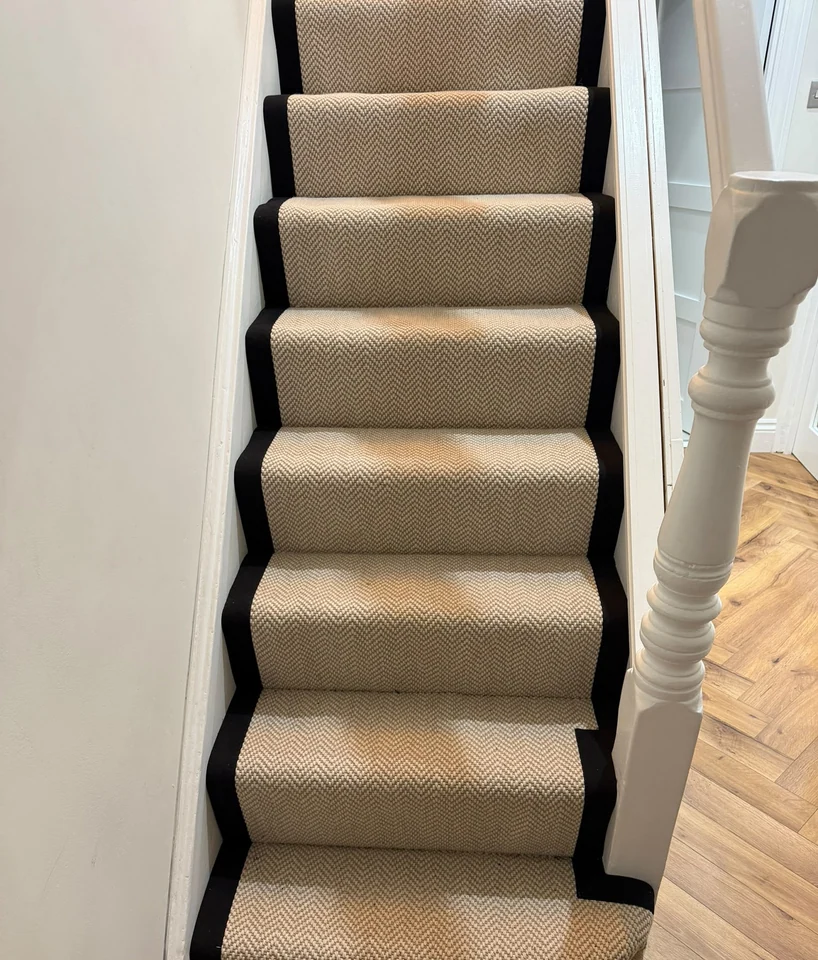
Pale carpet can bring a soft, coherent background to an interior, but its success depends on the household as much as the colour card. Rather than dismissing it or promising effortless upkeep, examine where dirt enters, how rooms are used and what maintenance is realistic.
Map the most demanding routes
Think through an ordinary week rather than an ideal photograph. Where do children come in from the garden, shoes come off, pets sleep and drinks get carried? The route from an external door may place different demands on carpet from an upstairs bedroom. A single continuous colour need not mean using the same specification in every area.
Consider whether a hard entrance area or other suitable dirt-control arrangement can reduce what reaches the carpet. Cormar's care guidance advises particular caution with light carpet beside external entrances and recommends effective doormats. Treat that as a practical planning prompt, not a promise that any one mat or household rule will eliminate soiling.
Find the right kind of pale
Place several sizeable samples on the floor beside the actual paint, joinery and upholstery. Compare them in daylight and under evening lighting. A sample called ivory, linen or stone can have a different undertone from the name you imagine. Photograph it only as a record; phone processing is not a reliable way to approve colour.
Look at subtly mixed or flecked surfaces alongside completely uniform options. Variation can change how small marks are perceived, although no colour disguises everything. Also compare pile texture, because reflected light and footprints may affect the appearance. Choose the normal lived-in surface you find acceptable, not just the pristine sample that initially looks brightest.
Understand the care before the first spill
Request the current cleaning guidance for the exact carpet and keep it accessible. British Wool recommends blotting liquid spills promptly and using appropriate approved products for wool. Other fibres and constructions may have different instructions. Check any binding or decorative edge as well, especially if the same pale material is being made into a runner.
Discuss the sorts of incidents likely in your home and read the exclusions in any stain warranty. A warranty is not a blanket promise that every mark can be removed. Avoid testing random household cleaners on the installed carpet. If an incident falls outside the supplied guidance, ask the manufacturer or an appropriately qualified cleaner for advice.
Choose a specification you can live with
Evaluate the carpet's approved use, texture and care together. A bedroom product may not be the correct choice for a heavily used landing simply because its colour matches. Underlay and installation should follow the selected system. Ask for the proposed specification to be written down, including any difference between rooms that share a similar palette.
Before ordering, be honest about the maintenance routine you want to sustain. You may prefer pale carpet in quieter rooms and a more forgiving appearance along busy routes. That is a coherent interior choice when transitions are planned. Keep spare material and product information as advised, while recognising that replacement pieces can look different from flooring that has been in use.