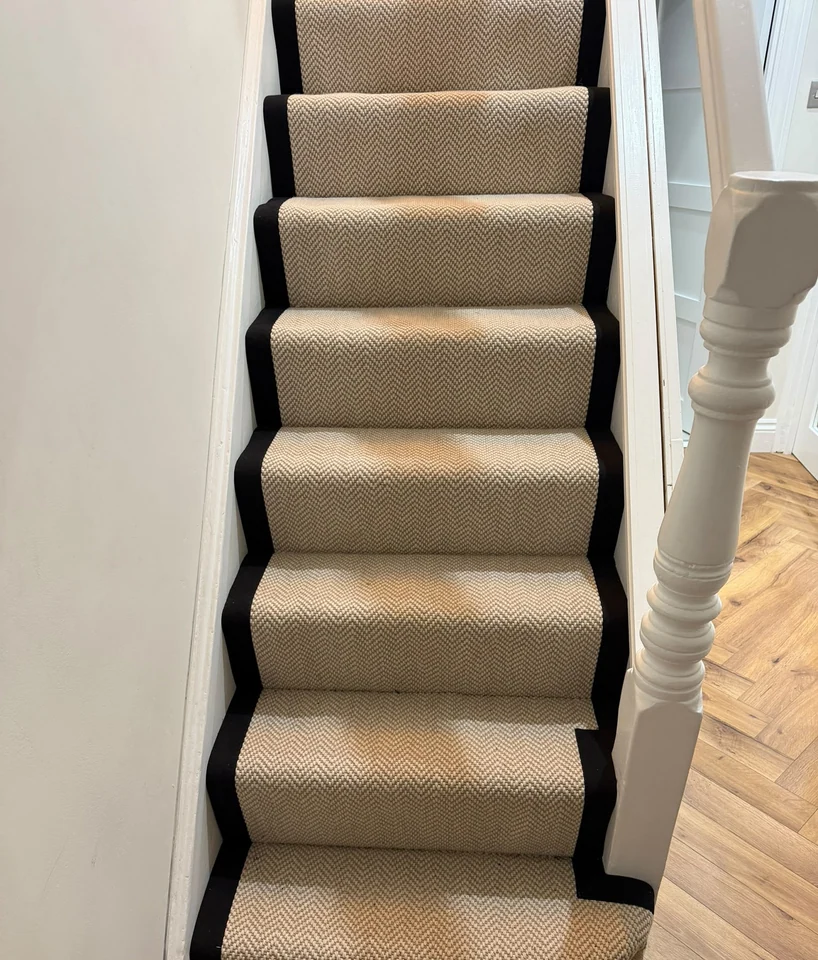
A new floor can sit comfortably beside an old staircase, fireplace or panelled door without pretending to be original. Start by understanding the features that give the room its character. Proportion, surface finish and the junction with existing materials often matter more than a period label.
Read what is already there
Make a short record of the room before selecting samples. Note the width of skirting, door proportions, fireplace material, stair finish and any existing floor visible in adjacent rooms. These details form a more useful brief than a broad request for Victorian or Georgian style. A house may contain features from several different periods and later alterations.
Decide which elements should lead the palette. A substantial timber staircase can be more visually influential than the colour of a small furniture piece. If an existing floor might be retained, arrange appropriate assessment before specifying replacement. Important historic fabric and any necessary consents need proper advice; a decorative preference alone is not a reason to disturb it.
Use scale and finish to find compatibility
Compare a straight-plank option with a patterned one in the room. Herringbone can work with traditional architecture, but so can restrained planks or a carefully chosen carpet. Judge how much detail the interior already contains. A highly figured floor beneath decorative joinery may create a different balance from a quieter surface that lets the original features remain prominent.
View real samples horizontally beside the hearth and skirting, in daylight and evening light. Sheen can change the impression as much as colour. With timber, ask to see a representative range of grain and character; Kährs advises mixing boards when installing to balance natural variation. A single selected swatch cannot communicate the complete appearance of a new wood floor.
Keep the description honest
Terms such as distressed, smoked or reclaimed describe different things and should not be used interchangeably. Ask the supplier to confirm exactly what the product is and how its finish is produced. If it is new flooring with an aged effect, call it that. Its suitability can be judged on its own merits without implying a history it does not possess.
A wood-effect LVT or laminate can support a sympathetic interior where its practical specification suits the room. It remains a manufactured effect rather than historic timber. Likewise, herringbone identifies an arrangement, not a guarantee of age or material. Use product information to establish composition and performance, rather than inferring either from a photograph.
Give the edges as much care as the field
An attractive floor can feel disconnected from an older interior if its perimeter is unresolved. Discuss how existing skirting, door architraves, hearths and thresholds will be treated, and what work is genuinely appropriate to those features. Avoid assuming that original joinery can simply be removed, cut or replaced to make the new installation easier.
Ask for a room-specific proposal that sets out preparation, finished height, necessary movement allowance and visible finishing details. Older construction may need specialist assessment where conditions are uncertain. The aim is a coherent present-day installation with respect for the building, supported by factual product descriptions and a clear scope of work.