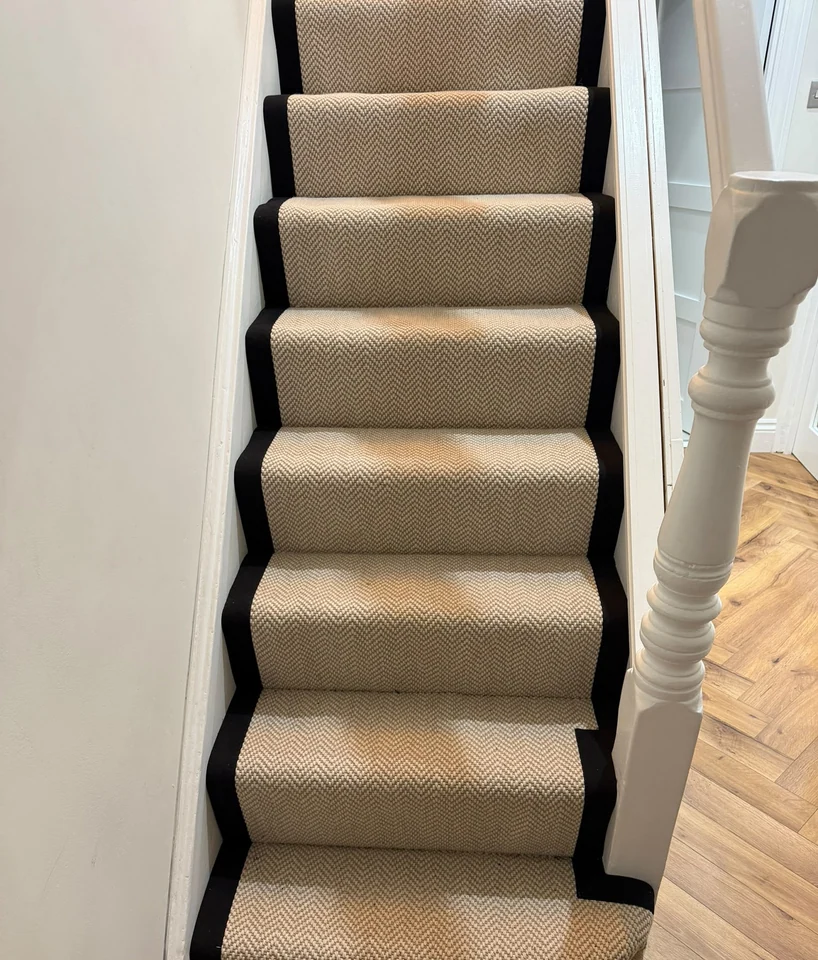
Proportion, texture and binding turn a practical stair covering into a strong architectural detail. Start with the staircase, not just the swatch.
Judge the exposed stair width
A runner frames the stair beneath it. The amount of exposed timber or paint changes the impression: a wider runner feels different from a narrow strip through the centre.
Measure the actual flight and consider handrails, spindles and landings. Winders and changes in stair width may need a different approach from a straight staircase.
Check stair suitability
Not every carpet is suitable for stairs or binding. Confirm the intended use, construction and the manufacturer’s care guidance before making a choice.
Pets, daily traffic and the shoes worn indoors can influence which textures are practical. Compare the feel and maintenance requirements alongside the appearance.
Treat the edge as part of the design
Contrast binding can define the outline; a close tonal match can make the edge quieter. Width, material and durability should be specified as well as colour.
At turning steps, the runner needs a cutting plan that respects the stair geometry. Discuss pattern placement and how it meets a carpeted landing.
Coordinate the surrounding work
Complete necessary stair repairs and plan painting before fitting. Agree where the painted finish will remain visible, and allow finishes to dry sufficiently.
The quotation should explain carpet, binding, underlay, fitting and any preparation. Step counts help at enquiry stage, but final measurements are needed for ordering.