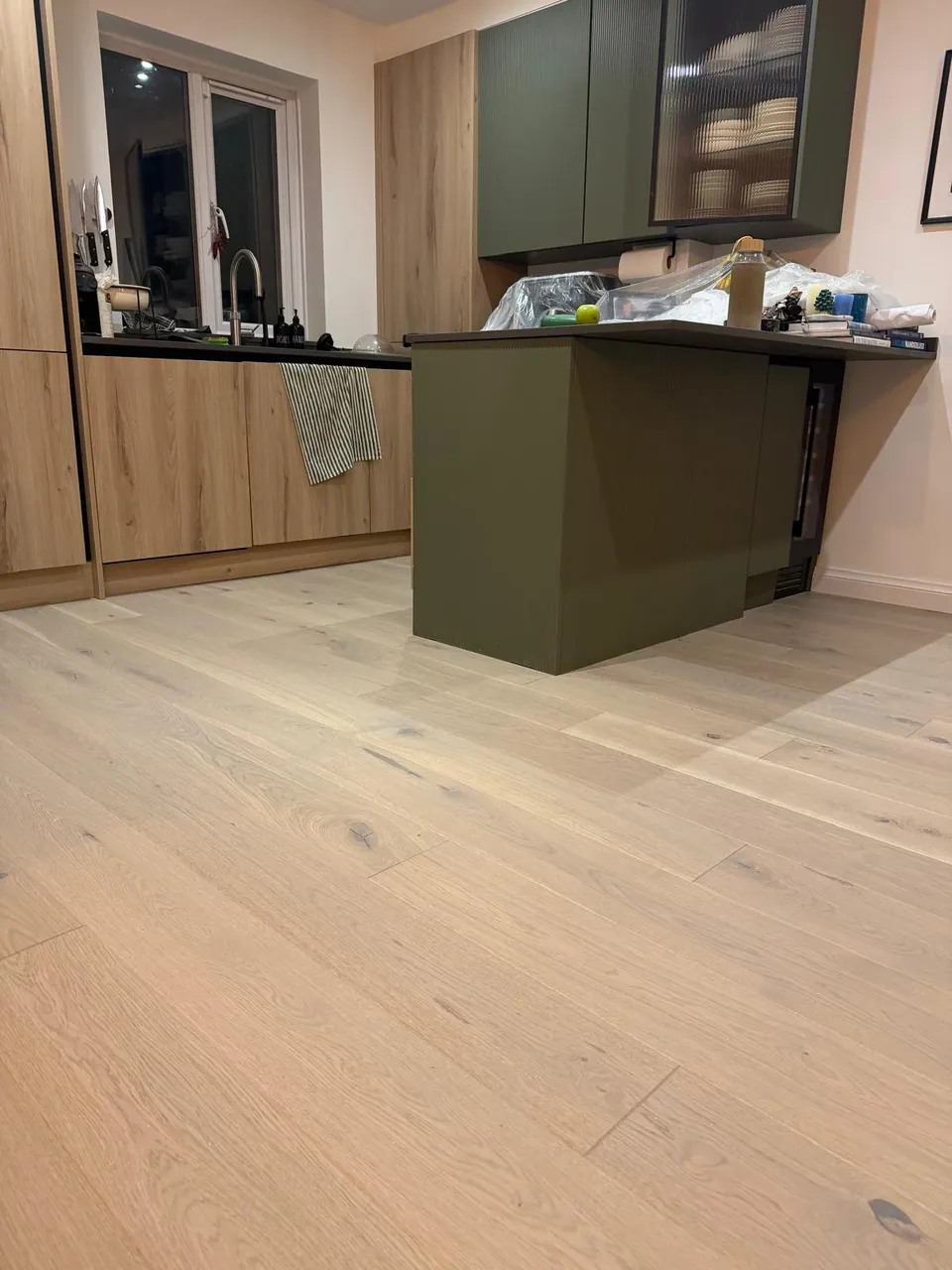
Choose for the room you live in, the texture you want and the base you have. These two floors answer different priorities.
What you see and feel
Engineered wood has a genuine timber surface, with natural variation from board to board. LVT uses a manufactured decorative surface and may repeat its printed design. Both categories include a broad range of finishes, so compare real samples rather than deciding from the category name.
Look at the floor in daylight and artificial light. Consider how it sits alongside kitchen cabinets, joinery and furniture. Texture, bevels and board width can matter as much as the colour.
How the room will be used
Water, grit, pets, chairs and direct sunlight all influence the specification. Check each manufacturer’s room suitability, maintenance instructions and warranty terms. Neither material label alone tells you everything about durability.
For spaces regularly exposed to water, a complete suitable installation system matters. A water-resistant surface is not the same as a waterproof room.
What sits underneath
A glue-down LVT floor often needs a carefully smoothed base. Engineered wood may be installed using different methods if the product permits them. Moisture and subfloor stability must be assessed for either choice.
Compare the finished build-up at doors and adjoining floors. Heating and acoustic requirements should be checked against the exact product and assembly.
How to compare quotations fairly
Ask for material supply, preparation, fitting, trims, removal and waste disposal to be identified. A lower fitting line can be misleading if essential preparation is absent.
Confirm who supplies the product, how quantities are established and who is responsible for manufacturer compatibility. Keep the specification and any exclusions in writing.