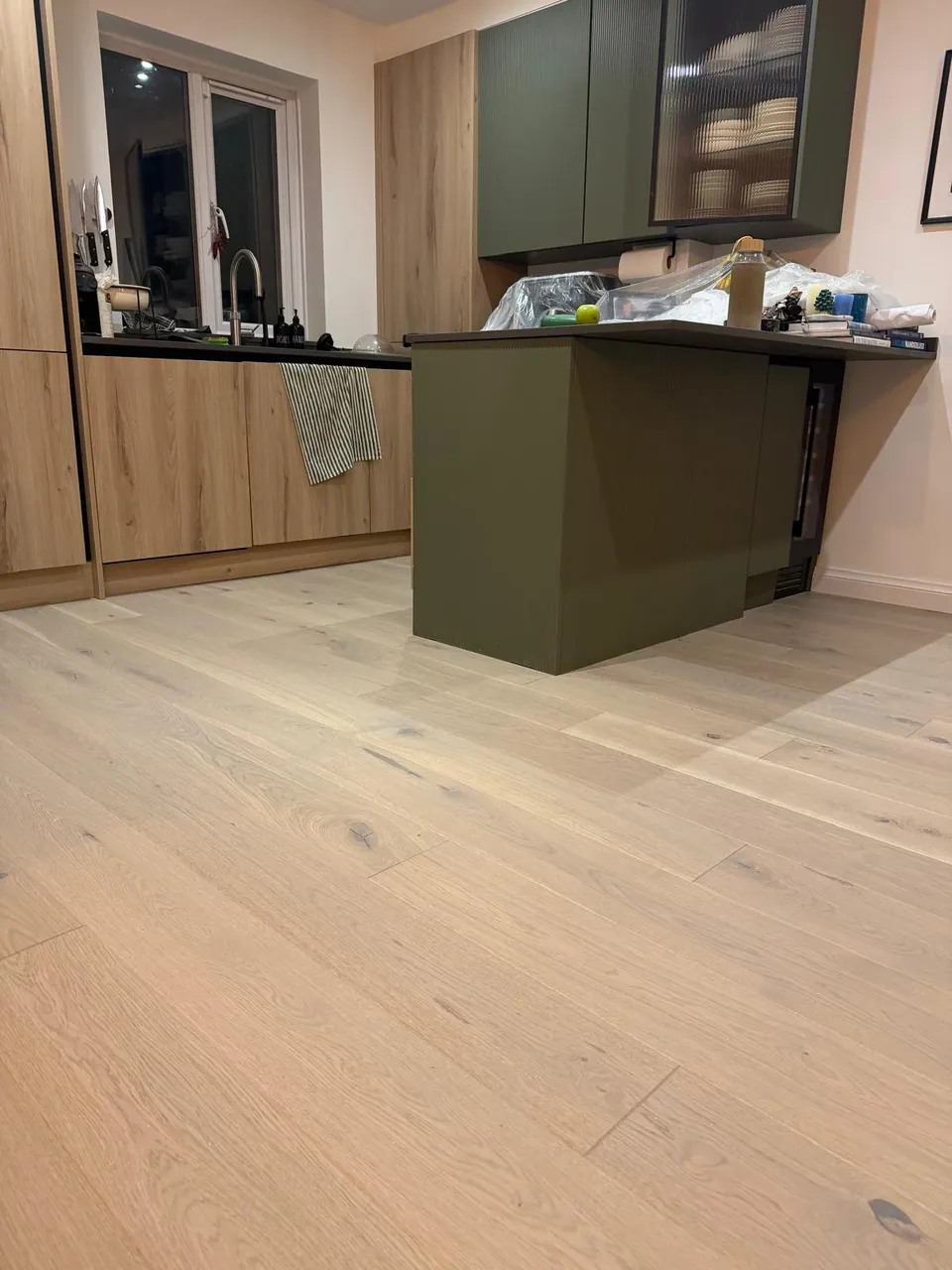
The arrival of timber packs is a project milestone, but it should happen when the building is ready to receive them. Storage, room conditions and the manufacturer's instructions matter together. Leaving boards somewhere indoors for an arbitrary number of days is not a complete acclimatisation plan.
Read the product guidance before delivery
Ask for the current fitting guide when choosing the floor, rather than searching for it on the day the packs arrive. Confirm that it covers the exact construction and installation method you intend to use. A general article about solid timber may not describe the storage requirements of a particular engineered board, locking system or factory finish.
Kährs' published instructions illustrate why assumptions are unhelpful: its guidance includes indoor conditioning, retaining original packaging until installation and storing packs flat. Other products may specify a different approach. Put the applicable instructions into the delivery brief so the homeowner, supplier and installer are working from the same document and understand who will check the conditions.
Choose a storage space that belongs to the project
Identify the actual room before arranging a delivery. It should be suitable for the product and accessible without repeatedly moving the packs through the house. Consider doors, stairs, long board lengths and the space the installer will need to work. A convenient temporary spot is only useful if its conditions also meet the flooring instructions.
Keep packs away from avoidable risks such as plumbing work, wet decorating and routes used for heavy materials. Do not lean boards against a wall or split the order among unrelated spaces without checking the guidance. For a large order or an apartment with storage constraints, agree delivery logistics with the supplier and installer instead of improvising after the vehicle arrives.
Make the room ready, not just the boards
Ask which wet trades, heating arrangements and environmental checks must be complete before storage and fitting. A house that is still open to the weather or cycling through unusual site conditions is different from a room approaching normal use. Write the relevant readiness conditions into the programme so acclimatisation does not become a vague gap between other appointments.
The substrate is a separate part of the assessment. Timber delivered into a suitable room is not evidence that the base meets moisture, flatness or stability requirements. Coordinate those checks before the installer is expected to start. This avoids a situation where correctly stored material is waiting beside a floor that still needs investigation or preparation.
Inspect and record without creating new problems
Check the delivery for the ordered product, quantity, batch information and obvious transport damage using the supplier's process. Keep labels and relevant photographs. If a pack is damaged or appears affected by moisture, contact the supplier before using it. A clear record at delivery is easier to assess than an unexplained issue discovered after boards have been distributed around the rooms.
Agree how boards will be inspected and selected when fitting begins, including the intended distribution of natural grain and tone. Retain a suitable repair reserve if it forms part of the order, with storage guidance for the remainder. Finally, keep the care instructions: the conditions that matter to real timber do not stop being relevant when the last threshold is fitted.