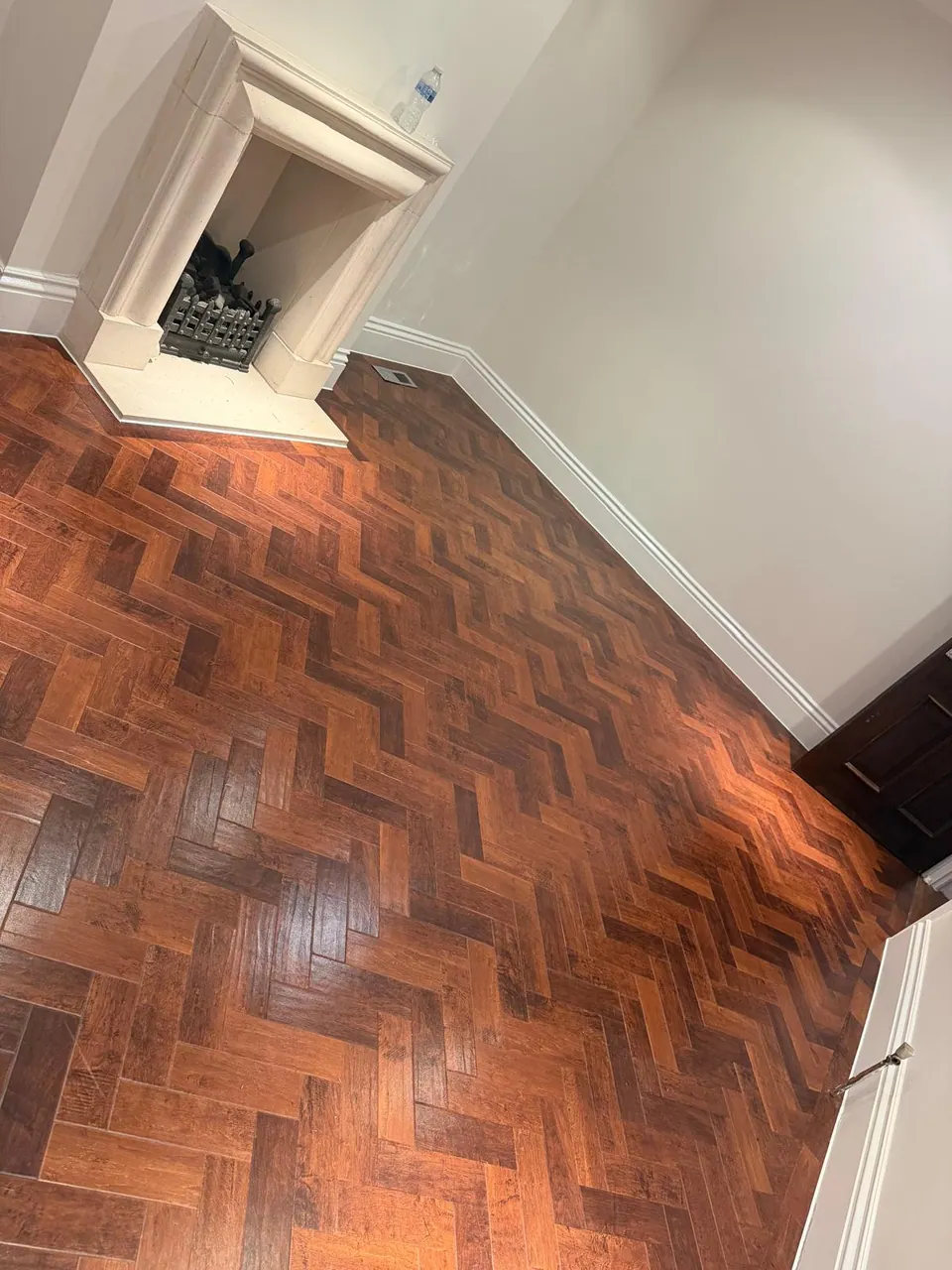
Once LVT is the preferred material, its visual language still needs choosing. Stone-effect tiles can give a room a different rhythm from timber-effect planks, even in similar colours. The most useful comparison begins with the surfaces already in the room and the way the floor will connect them.
Choose the relationship with your fixed surfaces
Place flooring samples beside the actual kitchen doors, worktop and hearth. Wood-effect LVT may provide a useful counterpoint to veined stone, while stone effect may allow distinctive timber cabinetry to stand out. Similar-looking timber effects can compete with real joinery if their colours almost match. Decide whether you want a close relationship or a deliberate contrast before refining the shortlist.
Avoid choosing from a mood board made entirely of tiny pieces. A busy worktop sample and a busy floor sample can seem balanced at the same size, but their areas in the finished room will be very different. Lay the floor pieces horizontally and keep the cabinet sample upright. That simple change makes the comparison more representative of the final arrangement.
Think in tiles and planks, not just colours
A rectangular plank directs the eye along its length; a tile layout introduces another network of joints. Look at the proposed piece dimensions and permitted laying patterns, not just the decorative image. In a narrow kitchen, compare the cuts beside both cabinets. In a larger room, consider how the layout passes through the doorway and around an island.
If a stone design includes decorative strips or a grout-like detail, approve their width and colour as part of the sample arrangement. These can substantially change the apparent scale of the floor. Ask what the chosen format permits. A neat drawing of four tiles meeting is not sufficient if the product's joint system requires a different installation pattern.
Assess the decorative range across several pieces
Both stone and wood effects use a manufactured decorative design, so view several pieces together to understand variation and repetition. A pronounced vein or knot can become a strong repeated motif. Stand back and ask whether that feature remains attractive across a room-sized area. A quieter pattern may work better beside already expressive joinery, even if the individual sample is less dramatic.
Turn the pieces only in ways the installation instructions allow. Ask the supplier for a larger display or product images showing the intended arrangement. Use a room visualiser for broad comparison if helpful, then return to physical samples for colour and texture. The screen cannot establish sheen, tactile quality or the exact effect of daylight across the surface.
Keep visual choice separate from room suitability
Check the exact product's intended use, heating compatibility and care requirements whichever effect you prefer. Stone effect does not mean the floor behaves like stone, and wood effect does not mean it can be sanded like timber. Ask for the appropriate installation and maintenance documents. That keeps the practical decision attached to the actual floor rather than the material it depicts.
Finally, look beyond the room itself. A stone-effect kitchen floor meeting real timber in the hall may benefit from a clearly resolved transition. A wood-effect floor beside existing wood needs particularly careful colour comparison. Agree the threshold position, finished levels and edge detail with the installer. The connection between materials is often where the quality of the complete scheme becomes most visible.